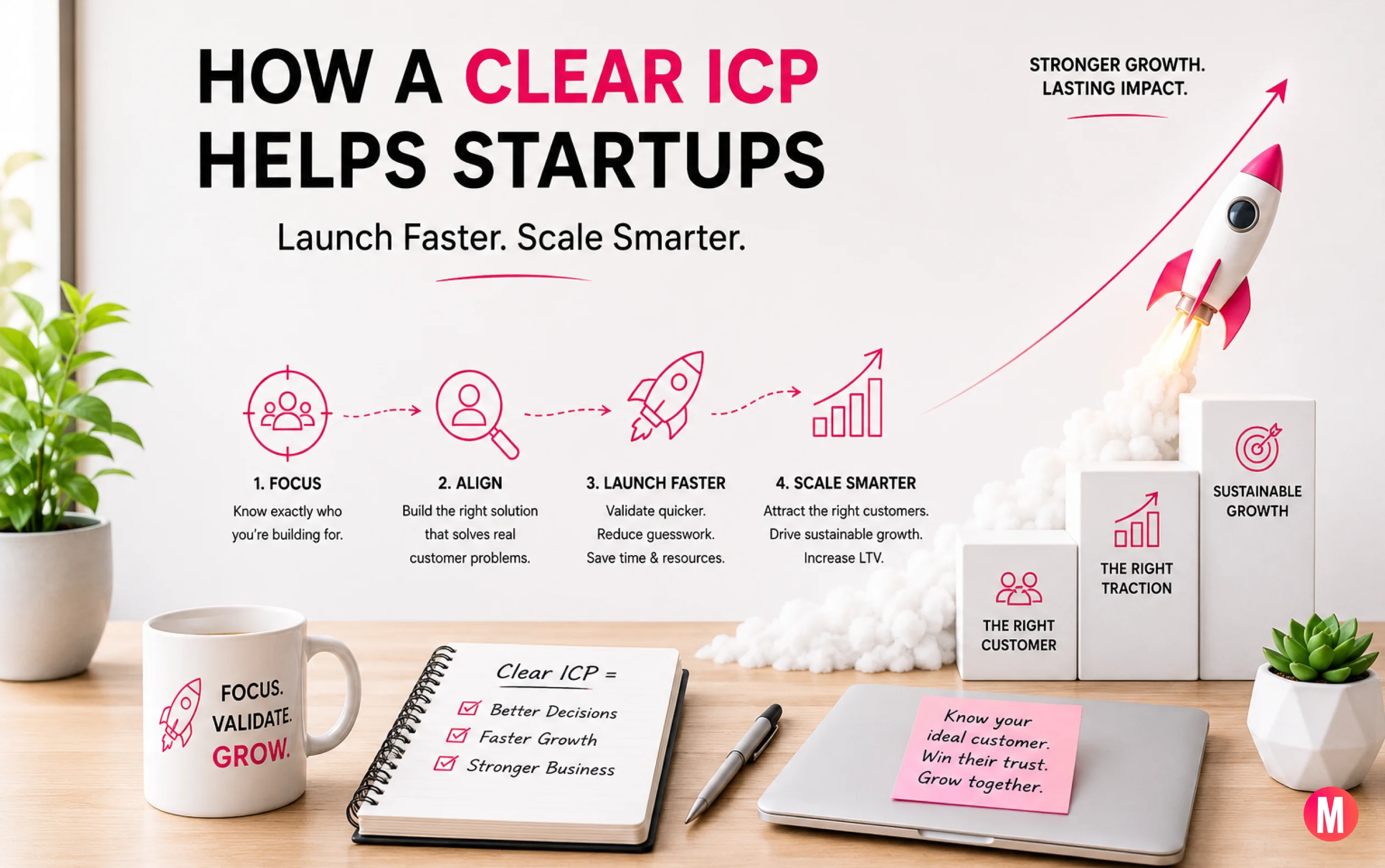



Startups typically don't fail because they can't make their product; they fall short because they create something great for the wrong crowd. In the beginning, every feature request and customer idea appears critical. So, founders end up dedicating months on stuff that doesn't really boost growth.
It's not about putting in longer hours or adding more devs. What helps is pinpointing your ideal customer profile. Having this clear lets you act smartly on each big call—from what new features to add to how to run your ops
When you lock onto your target user, you make moves based on knowledge, not guesses. You focus on things that genuinely count, which means making wise builds, marketing directly where it'll land, and smoothing out workflow kinks that actually affect your key users. ICP :- An Ideal Customer Profile, or ICP, is a detailed description of the perfect customer who get the most value from your solution and is likely to pay for it.
an ICP asks:
"Who gets the greatest value from our product, and is ready to pay for it?" That distinction changes everything.
The over-engineering trap
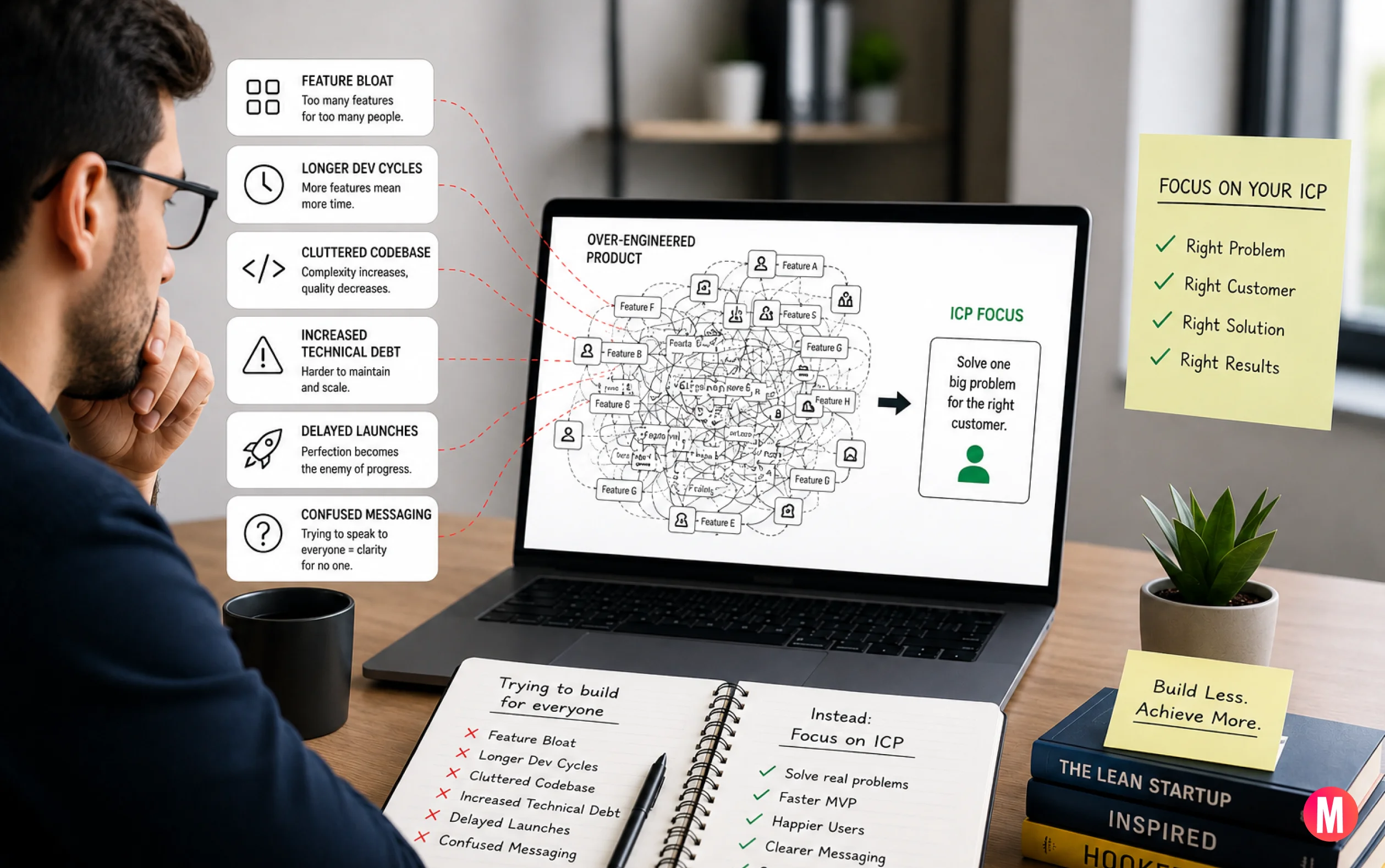
Building a product for everyone is one of the biggest missteps startups make. When there's no clear customer profile, teams tend to expand their product roadmaps to appeal to multiple groups. So product folks throw in features for one group, developers handle requests from others, and marketing tries to talk to everybody all at once.
The result is predictable:
Feature bloat
Longer development cycles
Cluttered codebases
Increased technical debt
Delayed product launches
Confused messaging
Instead of nailing one key issue super well, startups wind up with a mishmash of features that don't really help anyone effectively. And each extra feature has costs – not just making the product more complicated to build, but also to test, maintain, support, onboard users, and update down the line.
The icp blueprint: identifying the right customer
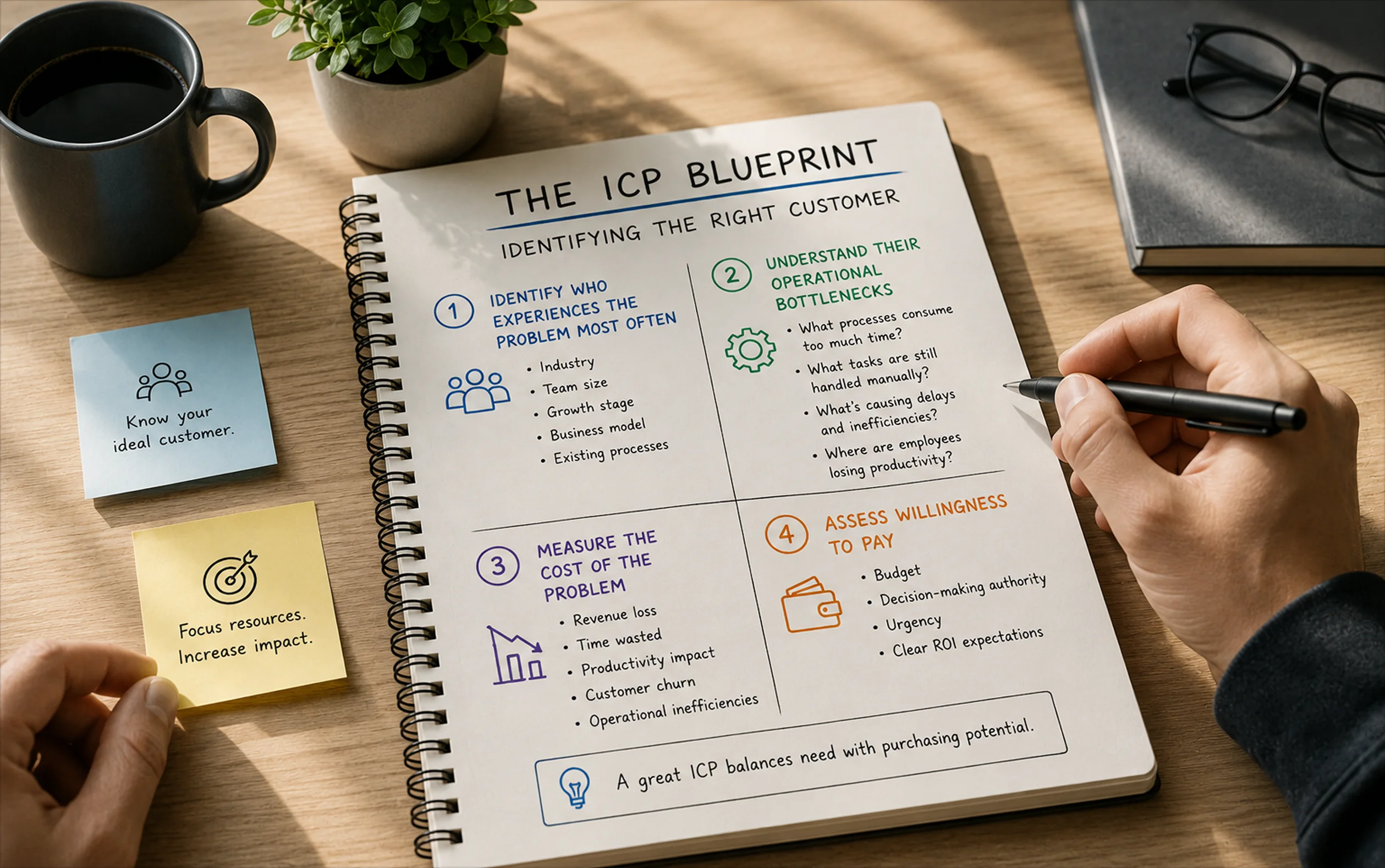
Creating an effective ICP requires much more than listing demographics. It means understanding the real business problems your customers face.
Identify Who Experiences the Problem Most Often
Which businesses or individuals repeatedly face the challenge your solution addresses?
Look at:
Industry
Team size
Growth stage
Business model
Existing processes
The goal is specificity, not broad appeal.
Understand Their Operational Bottlenecks
Focus on problems that create measurable friction. Ask questions like:
What processes consume too much time?
What tasks are still handled manually?
what's causing delays and inefficiencies ?
Where are employees losing productivity?
The more painful the problem, the more valuable the solution becomes.
Measure the Cost of the Problem
Customers buy solutions when the cost of the problem becomes too expensive to ignore. Consider:
Revenue loss
Time wasted
Productivity impact
Customer churn
Operational inefficiencies
Understanding the financial impact of the problem helps validate market demand.
Assess Willingness to Pay
Not every user with a problem is a customer.
The ideal customer has:
Budget
Decision-making authority
Urgency
Clear ROI expectations
A great ICP balances need with purchasing potential.
Ruthless roadmap prioritization
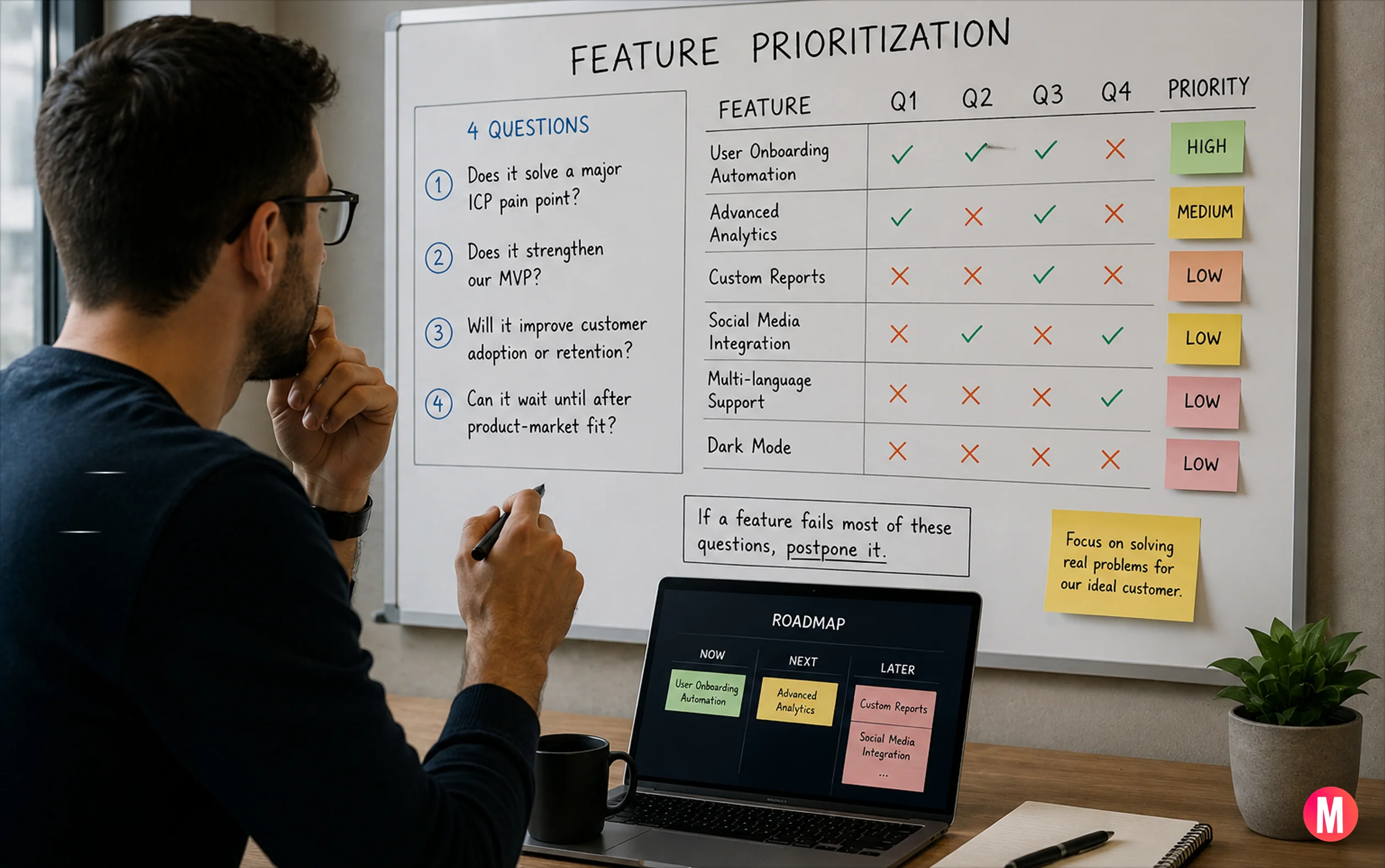
Once your ICP is clearly defined, product prioritization becomes dramatically easier.
Every new feature should pass four simple questions:
Does it solve a major ICP pain point?
Does it strengthen our MVP?
Will it improve customer adoption or retention?
Can it wait until after product-market fit?
If a feature fails most of these questions, postpone it.
This approach allows startups to build less—but achieve far more.
Example
Imagine you're building HR software for startups with fewer than 100 employees.
A customer requests enterprise-level compliance reporting.
While useful, it doesn't solve your ICP's immediate challenge of simplifying employee onboarding.
Instead of spending two months developing compliance dashboards, your team improves onboarding workflows, automated document collection, and employee self-service.
The result is a faster MVP that delivers more value to the customers you're actually targeting.
Cross-functional alignment: faster decisions, fewer meetings
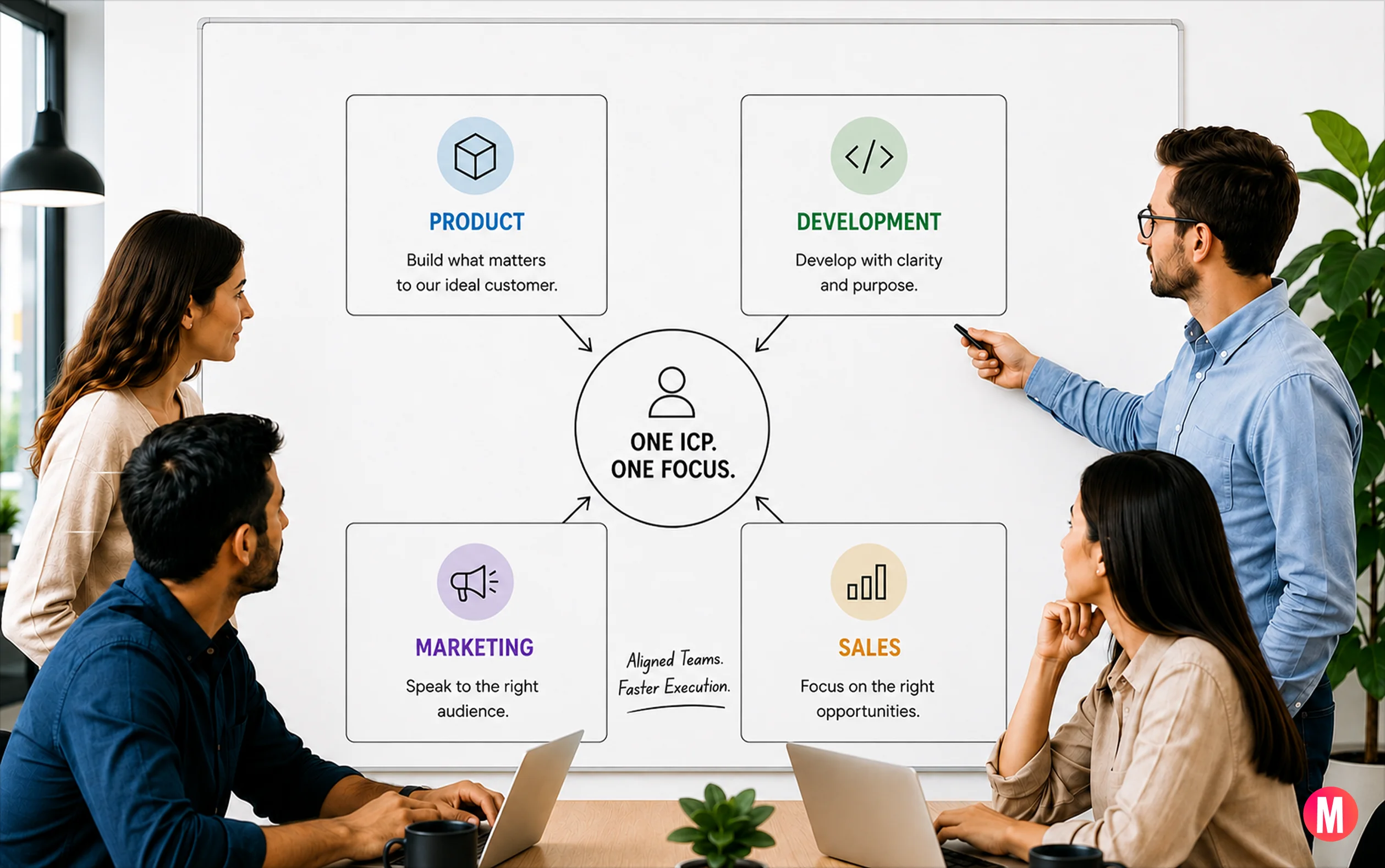
One of the most overlooked advantages of a strong ICP is organizational alignment.
Without a shared customer definition:
Product teams prioritize different goals.
Developers interpret requirements differently.
Marketing targets the wrong audience.
Sales pursues poorly qualified leads.
The result is confusion, conflicting priorities, and endless alignment meetings.
A documented ICP becomes a shared source of truth.
Developers know who they're building for.
Product managers know what deserves priority.
Marketing knows exactly who to target.
Sales understands which prospects are worth pursuing.
When every department works from the same customer profile, execution becomes significantly faster.
From strategy to setup
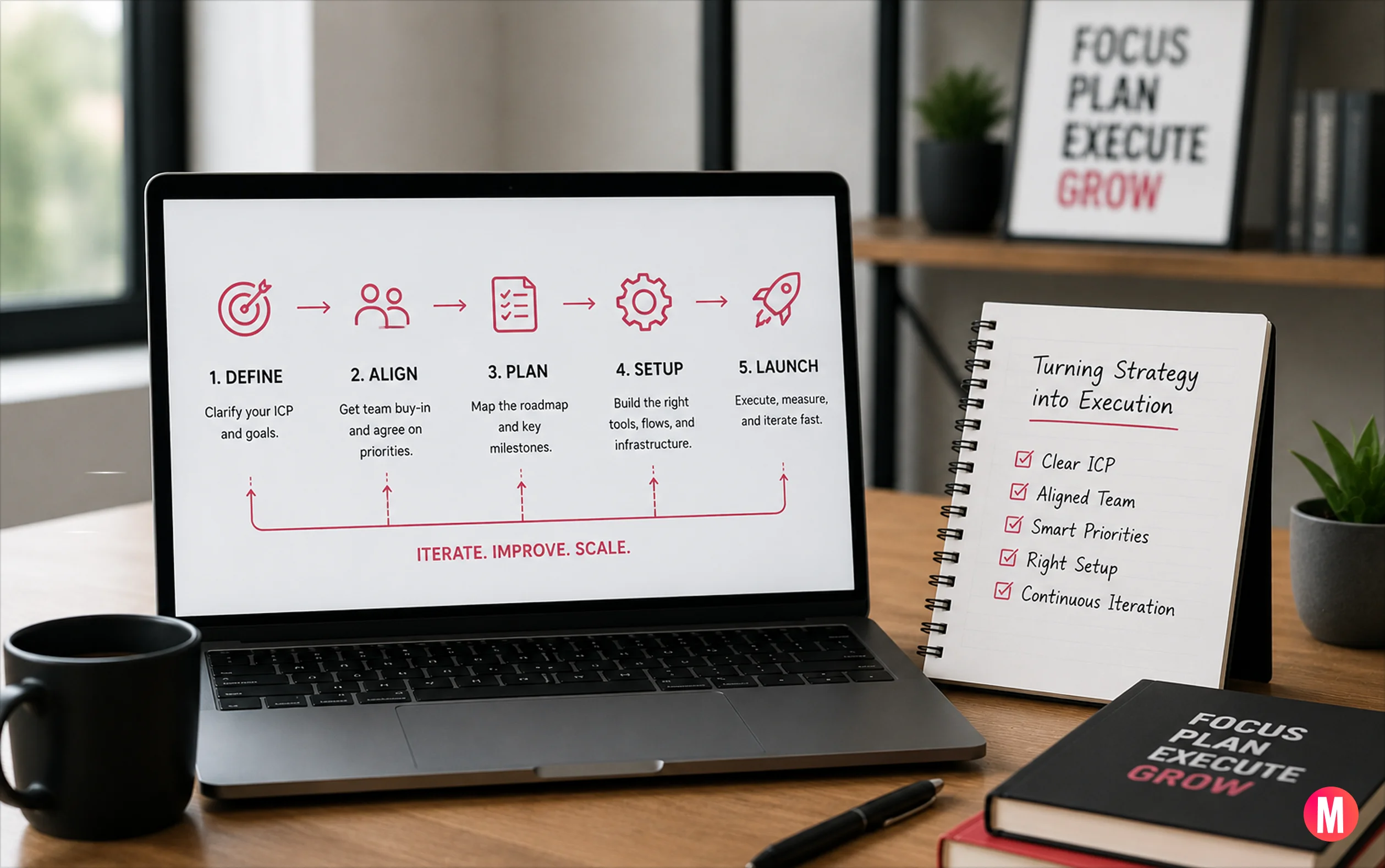
Defining your ICP is only the first step. Before investing in product development, validate your assumptions with agile landing page experiments.
Create a simple landing page that highlights your ideal customer's biggest challenge, explains how your solution addresses it, and includes a clear call-to-action such as joining a explains how your solution addresses it, and includes a clear call-to-action such as joining a waitlist or requesting a demo. Share it through channels where your target audience is active, such as LinkedIn, Google Ads, email campaigns, or niche communities.
Monitor sign-ups, demo requests, and conversion rates to measure interest. Strong engagement suggests your ICP is on the right track, while weak results indicate it's time to refine your messaging or customer profile before investing further in development.
Continue validating your assumptions through customer interviews, testing different value propositions, and securing early commitments through waitlists, pilot programs, or demos. These small experiments help ensure you're building for genuine market demand rather than assumptions.
Conclusion
Startup success usually is not about how many features you ship. It comes down to one thing: are you solving a real, important problem for the right people?
A clear ICP becomes your filter for everything, what you build, how you market, how you run ops, and where you invest time next. And the clearer it is, the easier it gets to prioritize, align the team, automate with purpose, and move closer to real product market fit.
Before you write more code, launch another campaign, or add another workflow, pause and ask:
“Does this help our ideal customer solve their most important problem?”
If you keep coming back to that question, you will avoid months of busy work and build a real advantage that is hard to copy.



Industries
Services
Company
Resources